
Let's Talk About It: A Sunday Follow-Up
HELLO NORTH ANDERSON FAMILY AND FRIENDS
I pray that your week is off to a great start. I’m so thankful for the great Lord’s Day that the Lord blessed us with yesterday and we honored mother’s, grew in our love for the Lord, His Word, and one another in Bible Fellowship and continued in our series in Acts in corporate worship.
As has been the case lately, the Lord blessed us with great attendance and a large number of guests. We’re so grateful for His blessing and I am especially thankful for how well you welcome those who are new to North Anderson.
It’s easy to forget how difficult it can be to walk through the doors of a Sanctuary for some. I can tell you that this past Sunday, there were people who joined us who are currently looking for a new church family, walking through some incredibly hard circumstances, are healing from past hurt they experienced in church and are just now giving it another try, and there were individuals present who aren’t Christians (yet!) and because of the invitation of a friend, they came.
There are a variety of things that can make just showing up tough, but your warmth and hospitality make it easier for them to come back again. Well done! Keep up the great work. Your kindness, smile, sincere welcome, and encouraging word matters!
The sermon from Sunday morning was pulled from Acts 3 and focused on the miracle of the lame beggar healed by Jesus through Peter and John at the temple gate.
If you missed the sermon, you can check it out here - https://www.northandersonbaptist.com/media/dzx7nf6/miracle-and-message
After reviewing the events leading up to Acts 3: Pentecost, the coming of the Holy Spirit, Peter’s sermon, and the birth of the early church—the sermon framed the passage around three key questions: What happened? Why did it happen? And should we expect miracles like this today?
The first portion on Sunday’s sermon explained what actually happened in Acts 3 and made an important distinction between God’s providence and a true miracle. While both of these things are wonderful and gracious acts of God, in order to correctly interpret how God has worked in the past, present, and the future, we need to be able to distinguish one from the other.
God’s providence refers to His sovereign guidance over all things in everyday life, while a miracle is described as an extraordinary act of God that transcends natural laws in order to reveal His power and purposes.
We were reminded on Sunday that while Gods providence is clearly seen on every page of the Bible and in every area of our lives, miracles, even in the scriptures, are rare, and they are always extraordinary in nature.
Luke’s detailed description of the lame man—disabled from birth and dependent on others to carry him daily to the temple gate—underscores the miraculous, supernatural nature of what follows.
You’ll remember that when Peter and John stop, look directly at the man with compassion, and in the name of Jesus command him to walk…instantly, the man receives strength in his legs, rises, walks, leaps, and praises God, demonstrating a genuine and verifiable miracle.
We then explored why this miracle occurred.
The primary purpose of this great miracle was not to glorify Peter, John, or even the healing itself, but to direct attention to Jesus Christ. Like all miracles in Acts, this healing authenticated the apostles’ message and served as divine confirmation that Jesus truly was the risen Messiah.
Peter immediately uses the crowd’s amazement as an opportunity to preach the gospel, declaring that the healing came through faith in the name of Jesus.
The miracle also pointed forward to God’s promise of the future restoration of all things. Jesus’ miracles were never mere displays of raw power or spectacles meant to entertain; they revealed God’s redemptive purpose by confronting suffering, sickness, brokenness, and death. The healing of the lame man fulfilled Old Testament hopes and reminded listeners that one day Christ will fully restore creation.
Another major emphasis of the sermon is that the miracle symbolizes humanity’s deeper spiritual need.
The lame man initially wanted money, but Peter gave him something greater: healing and ultimately the opportunity for salvation through Christ. We were reminded that physical healing, financial stability, or improved circumstances can never fully satisfy the human heart because humanity’s greatest need is reconciliation with God. The story serves as a picture of spiritual restoration, showing that Jesus alone can heal the soul and provide eternal hope.
Even miraculous physical healing is temporary unless it leads a person to Christ and the promise of final restoration.
Additionally, we spent some time addressing whether or not believers today should expect miracles like the one in Acts 3.
We affirmed that God still performs miracles and that nothing in Scripture teaches otherwise.
With that being said, the extraordinary miracle-working authority given to the apostles served a unique purpose during a specific period, establishing and authenticating the early church. Because this is the case, though God can (and does) still perform miracles, Christians should not assume that miraculous healings will always occur on demand as they did in Acts.
Even still, believers can pray for God’s miraculous hand of blessing and trust that God remains sovereign and compassionate, sometimes choosing to heal physically and other times choosing to glorify Himself through perseverance in suffering.
In order to think a little deeper and further develop our thinking on this subject, thoughtfully work through the following questions:
Why is it important to distinguish between God’s providence and a miracle? How does that affect the way we view God’s work in our lives?
In what ways did the healing of the lame man point beyond itself to Jesus and the coming restoration of all things?
What are some things people commonly look to for satisfaction besides Christ?
Why can only Jesus truly restore and satisfy the human soul?
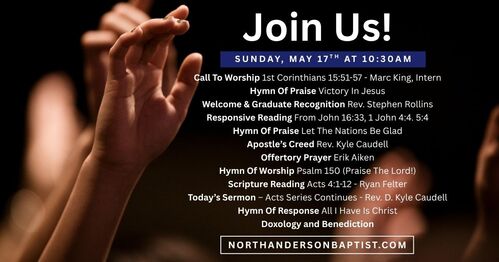
This Sunday, we’ll be recognizing our graduates and continuing our series by working through the story of Peter and John’s arrest in Acts 4. Please take some time to read, study, and meditate on verses 1-22 in preparation for worship.
Also: To honor our graduates, we will present each one with a CSB notetaking Bible. On Wednesday, those Bibles will be available for you to highlight a few passages of scripture that have been especially meaningful for you. You may also make a note explaining why. You will be able to do this in both the morning and evening services (pens and highlighters will be available)
As has been the case lately, the Lord blessed us with great attendance and a large number of guests. We’re so grateful for His blessing and I am especially thankful for how well you welcome those who are new to North Anderson.
It’s easy to forget how difficult it can be to walk through the doors of a Sanctuary for some. I can tell you that this past Sunday, there were people who joined us who are currently looking for a new church family, walking through some incredibly hard circumstances, are healing from past hurt they experienced in church and are just now giving it another try, and there were individuals present who aren’t Christians (yet!) and because of the invitation of a friend, they came.
There are a variety of things that can make just showing up tough, but your warmth and hospitality make it easier for them to come back again. Well done! Keep up the great work. Your kindness, smile, sincere welcome, and encouraging word matters!
The sermon from Sunday morning was pulled from Acts 3 and focused on the miracle of the lame beggar healed by Jesus through Peter and John at the temple gate.
If you missed the sermon, you can check it out here - https://www.northandersonbaptist.com/media/dzx7nf6/miracle-and-message
After reviewing the events leading up to Acts 3: Pentecost, the coming of the Holy Spirit, Peter’s sermon, and the birth of the early church—the sermon framed the passage around three key questions: What happened? Why did it happen? And should we expect miracles like this today?
The first portion on Sunday’s sermon explained what actually happened in Acts 3 and made an important distinction between God’s providence and a true miracle. While both of these things are wonderful and gracious acts of God, in order to correctly interpret how God has worked in the past, present, and the future, we need to be able to distinguish one from the other.
God’s providence refers to His sovereign guidance over all things in everyday life, while a miracle is described as an extraordinary act of God that transcends natural laws in order to reveal His power and purposes.
We were reminded on Sunday that while Gods providence is clearly seen on every page of the Bible and in every area of our lives, miracles, even in the scriptures, are rare, and they are always extraordinary in nature.
Luke’s detailed description of the lame man—disabled from birth and dependent on others to carry him daily to the temple gate—underscores the miraculous, supernatural nature of what follows.
You’ll remember that when Peter and John stop, look directly at the man with compassion, and in the name of Jesus command him to walk…instantly, the man receives strength in his legs, rises, walks, leaps, and praises God, demonstrating a genuine and verifiable miracle.
We then explored why this miracle occurred.
The primary purpose of this great miracle was not to glorify Peter, John, or even the healing itself, but to direct attention to Jesus Christ. Like all miracles in Acts, this healing authenticated the apostles’ message and served as divine confirmation that Jesus truly was the risen Messiah.
Peter immediately uses the crowd’s amazement as an opportunity to preach the gospel, declaring that the healing came through faith in the name of Jesus.
The miracle also pointed forward to God’s promise of the future restoration of all things. Jesus’ miracles were never mere displays of raw power or spectacles meant to entertain; they revealed God’s redemptive purpose by confronting suffering, sickness, brokenness, and death. The healing of the lame man fulfilled Old Testament hopes and reminded listeners that one day Christ will fully restore creation.
Another major emphasis of the sermon is that the miracle symbolizes humanity’s deeper spiritual need.
The lame man initially wanted money, but Peter gave him something greater: healing and ultimately the opportunity for salvation through Christ. We were reminded that physical healing, financial stability, or improved circumstances can never fully satisfy the human heart because humanity’s greatest need is reconciliation with God. The story serves as a picture of spiritual restoration, showing that Jesus alone can heal the soul and provide eternal hope.
Even miraculous physical healing is temporary unless it leads a person to Christ and the promise of final restoration.
Additionally, we spent some time addressing whether or not believers today should expect miracles like the one in Acts 3.
We affirmed that God still performs miracles and that nothing in Scripture teaches otherwise.
With that being said, the extraordinary miracle-working authority given to the apostles served a unique purpose during a specific period, establishing and authenticating the early church. Because this is the case, though God can (and does) still perform miracles, Christians should not assume that miraculous healings will always occur on demand as they did in Acts.
Even still, believers can pray for God’s miraculous hand of blessing and trust that God remains sovereign and compassionate, sometimes choosing to heal physically and other times choosing to glorify Himself through perseverance in suffering.
In order to think a little deeper and further develop our thinking on this subject, thoughtfully work through the following questions:
Why is it important to distinguish between God’s providence and a miracle? How does that affect the way we view God’s work in our lives?
In what ways did the healing of the lame man point beyond itself to Jesus and the coming restoration of all things?
What are some things people commonly look to for satisfaction besides Christ?
Why can only Jesus truly restore and satisfy the human soul?
This Sunday, we’ll be recognizing our graduates and continuing our series by working through the story of Peter and John’s arrest in Acts 4. Please take some time to read, study, and meditate on verses 1-22 in preparation for worship.
Also: To honor our graduates, we will present each one with a CSB notetaking Bible. On Wednesday, those Bibles will be available for you to highlight a few passages of scripture that have been especially meaningful for you. You may also make a note explaining why. You will be able to do this in both the morning and evening services (pens and highlighters will be available)
Recent
Archive
2026
January
February
August
2025
January
February
March
April
May
June
July
August
September
2024